New UNIDO Guide Helps Countries Break Language Barriers in Standards Adoption
Vienna, 14 September 2026 – Translating international standards into national languages can unlock real opportunities for businesses and economies. When small and medium-sized enterprises (SMEs), regulators and other stakeholders can read and apply standards in their own language, not only in English or French, they are better equipped to improve product quality and safety, meet market requirements, and take part in regional and global trade. A new UNIDO publication helps countries make that possible.
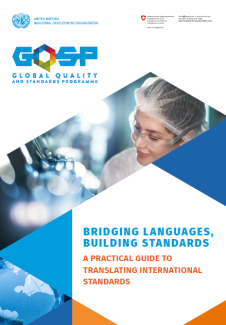
Developed under the Global Quality and Standards Programme (GQSP), funded by Switzerland through its State Secretariat for Economic Affairs (SECO), "Bridging Languages, Building Standards: A Practical Guide to Translating International Standards" provides National Standards Bodies (NSBs) with a structured, step-by-step approach to producing high-quality translations of international and regional standards.
The stakes are high. Inaccurate or inconsistent translations can have serious consequences, from misinterpretation of safety requirements to failed conformity assessment processes. At the same time, well-translated standards open markets, reduce technical barriers to trade, and empower industries to compete globally. For SMEs with limited foreign language capacity, access to standards in their national language can be the difference between market participation and exclusion.
The guide draws on UNIDO's extensive experience working with NSBs across multiple countries and regions, as well as the expertise of international QI specialists and national standards bodies. It walks users through seven key steps, from understanding the context and assembling the right team, to managing the translation process, conducting peer review, and ensuring continual improvement over time.
Crucially, the guide emphasizes that translation is not a word-for-word exercise. It is a process that requires technical expertise, terminological rigor, and careful attention to legal and cultural nuances. It also addresses the growing role of artificial intelligence in translation workflows, offering practical guidance on how to use these tools intelligently while retaining essential human oversight.
The publication is particularly timely as countries across Africa, Asia, and Latin America scale up their national standards programmes and seek to align with international requirements. By equipping NSBs with practical tools to produce accurate, accessible translations, UNIDO is helping to ensure that the benefits of international standardization reach every stakeholder, regardless of language.
The guide is available on the UNIDO Knowledge Hub and can be accessed here.
For more information, please contact Dorina Nati d.nati [at] unido.org